Hi All,
This is very interesting article I came across some time back, wanted to share its aspects with you all
Solar power is known as an exemplary way to generate sustainable power.
Solar researchers across the world are working tireless to boost the
efficiency of solar cells of various genres. Of late, a team of
researchers at the Northwestern University has advanced up with an
innovative breakthrough in solar cell efficiency. The researchers have
shaped up a reliable dye-sensitized solar panel that is cheaper and can
ensure better power efficiency than the regular cells.
The inventive solar technology is really a variant of the Grätzel
cell, a kind of dye-sensitized solar cell, which makes use of
semiconductor titanium oxide in place of the conventional silicon
material. The outcome is that the solar cell, which is named after the
Swiss chemist Michel Grätzel, delivers better power efficiency and is
inexpensive, less toxic and certainly environmental in several aspects,
the researchers claim.
In fact, the breakthrough the researchers have achieved is their
successful attempt to solve a persisting problem with the Grätzel
design. Since it makes use of an organic liquid as its electrolyte,
there is a chance that it may leak in various conditions. The leaked
liquid is threatening because it will corrode the entire cell. Well, it
is here the Northwestern University researchers have proved their
credential well. They developed a fresh material called the CsSnI3 that
can solidify the liquid and prevent seepage under any condition.
The CsSnI3 is a very slim film compound, which merges cesium, iodine
and tin. It is basically added in liquid form to dye-coat nano particles,
but it turns to a solid mass so that there won’t be any leakage issue.
Well, as per the lead researcher, Robert P.H Chang, it is the first demo
of a solid-state dye-sensitized solar cell that can definitely ensure
better efficiency than the current solar technologies.
Showing posts with label solar power. Show all posts
Showing posts with label solar power. Show all posts
Monday, 29 April 2013

Thursday, 25 April 2013
Andhra Pradesh proposes tariff of 6.49 INR/KWh
Andhra Pradesh government on Tuesday fixed the benchmark price for purchase of solar power at Rs 6.49 per unit. The Cabinet Sub-Committee on Power fixed the benchmark price at its meeting on Tuesday. The State through AP Transco as the nodal agency had invited bids from private developers to set up solar PV units aiming to develop about 1000 MW in view of the unprecedented electricity crisis.
In the process, about 331 bids for development of 1,780 MW were received.
Developers will be given 30 days to respond to the proposal.
The tariff offered by Andhra Pradesh is lower than what developers will eventually get in Tamil Nadu
So it is to be seen how developers will take to such a tariff offer in Andhra Pradesh.
If one were to compare the rates offered by Andhra Pradesh and Tamil Nadu, the Scenario completely changes.
Tamil Nadu had offered Rs 6.48 a unit with escalation facility of 5 per
cent over 10 years. This leads to a levelised tariff of Rs 7.75 a unit.
As per the new solar power policy announced by the state government, net
metering facility will be implemented for consumers who set up solar PV
plants on roof-tops, waste lands, industries, offices, institutions and
residential complexes. Subsidy will be provided by the Union Government
up to 30 per cent of the panel cost up to a capacity of 500 KW without
battery support
So now we have to wait and see how the developers respond to this...
please let know your suggeestions and feedback
Wednesday, 24 April 2013
New breed of recyclable solar cells made from plants
A remarkable and eco-friendly way to harness solar energy is found by researchers from Center for Organic Photonics and Electronics at Georgia
Tech and Purdue
Solar cells provide us with the most eco-friendly way to harnessing energy and creating electricity with emissions. However, the creation of solar cells themselves is pretty un-eco-friendly which sort of defeats the purpose they serve to an extent. However, researchers currently working at the Center for Organic Photonics and Electronics at Georgia Tech and Purdue claim that they have created the solar cells using nothing more than the materials we find in trees. Using a renewable resource to create green technology, the researchers have created a new kind of organic solar cells that are disposable at the end of their lifecycle and are less dependence on fossil fuels for its production and recycling.
Using the same basic organic substrates that plants use for the chemical process that facilitates photosynthesis, the new organic solar cells convert around 2.7% of the solar energy they get into electricity. The number is pretty impressive when you consider that organic materials and not chemicals were used to create this amazing conversion.
An easily biodegradable structure called cellulose nanocrystal is used to mount these organic substrates which allows the solar cells to be recycled using nothing more than warm water when their useful life is over. The joint research team has thus created a more eco-friendly way to create and recycle technology that is used to provide green energy. The team is now working at trying to get these organic substrates to convert solar energy more efficiently and possibly even make double-digit conversion efficiency soon.
Of course, the water soluble solar cells would need to be protected against rain and storms though that could easily be facilitated via glass or transparent waterproof encasing.
The team hopes to get the solar cells into production within the next five years.
I wish the team all the best from our blog
please send you feedback about this article..
Solar cells provide us with the most eco-friendly way to harnessing energy and creating electricity with emissions. However, the creation of solar cells themselves is pretty un-eco-friendly which sort of defeats the purpose they serve to an extent. However, researchers currently working at the Center for Organic Photonics and Electronics at Georgia Tech and Purdue claim that they have created the solar cells using nothing more than the materials we find in trees. Using a renewable resource to create green technology, the researchers have created a new kind of organic solar cells that are disposable at the end of their lifecycle and are less dependence on fossil fuels for its production and recycling.
Using the same basic organic substrates that plants use for the chemical process that facilitates photosynthesis, the new organic solar cells convert around 2.7% of the solar energy they get into electricity. The number is pretty impressive when you consider that organic materials and not chemicals were used to create this amazing conversion.
An easily biodegradable structure called cellulose nanocrystal is used to mount these organic substrates which allows the solar cells to be recycled using nothing more than warm water when their useful life is over. The joint research team has thus created a more eco-friendly way to create and recycle technology that is used to provide green energy. The team is now working at trying to get these organic substrates to convert solar energy more efficiently and possibly even make double-digit conversion efficiency soon.
Of course, the water soluble solar cells would need to be protected against rain and storms though that could easily be facilitated via glass or transparent waterproof encasing.
The team hopes to get the solar cells into production within the next five years.
I wish the team all the best from our blog
please send you feedback about this article..
Tuesday, 23 April 2013
India's Grid Connected Renewable energy installations
The statistics show a very fair growth in India's Renewable energy sector
According to Ministry of Power, as on January 2013 the total Renewable energy capacity of India is about 25,856.14MW (excluding hydro power projects) which accounts to a precise of 12.2% of the total energy produced in India
Solar Power:
 |
Wind Power:

The development of wind power in India began in the 1990s, and has significantly increased in the last few years. As of January 2013 the installed capacity of wind power in India was 18634.9MW
Hydro power:

India is endowed with economically exploitable and viable hydro potential assessed to be about 84,000 MW at 60% load factor. The current installed capacity of Hydro power counts to 39,416.40MW with 18.61% of the total energy production of India
Geothermal Power:
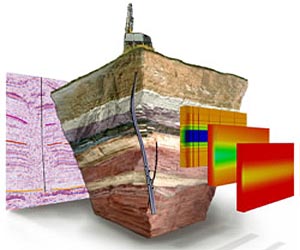
Though
India has been one of the earliest countries to begin geothermal
projects way back in the 1970s, but at present there are no operational
geothermal plants in India.Geothermal
power is cost effective, reliable, sustainable, and environmentally
friendly, but has historically been limited to areas near tectonic plate
boundaries. the potential geothermal provinces can produce 10,600 MW of power
It has been estimated from geological, geochemical, shallow geophysical and shallow drilling data it is estimated that India has about 10,000 MW of geothermal power potential that can be harnessed for various purposes.
Different orogenic regions are – Himalayan geothermal province, Naga-Lushai geothermal province, Andaman-Nicobar Islands geothermal province and non-orogenic regions are – Cambay graben, Son-Narmada-Tapi graben, west coast, Damodar valley, Mahanadi valley, Godavari valley etc
The MNRE said that grid-balancing problems have limited India's deployment of grid-connected solar and wind power plants, and the country is in talks with Germany, which has state-of-the-art technology in this field, to obtain the know-how.
Please give your comments and share more information for the readers.
Thanks
Thursday, 6 December 2012
JNNSM Phase II Draft annaounced
Dear All,
Its sunny side up yet again.
India’s Ministry of New and Renewable Energy (MNRE) has issued a draft solar policy for Phase II (2013- 2017) of the country’s Jawaharlal Nehru National Solar Mission (JNNSM), outlining its strategy to install 10GW by 2017 through mostly utility-scale projects.
The objective of the MNRE’s Solar Mission is to create through rapid scale-up of capacity and technological innovation, to drive down costs towards grid parity. The ministry believes solar power could achieve grid parity and become cost competitive with coal in India by 2018 due to the decrease in module prices.
 |
| MNRE draft |
The schemes include 'bundling', which involves combining solar power with traditional sources of energy like coal, which can be sold to utilities at a cheaper rate than offered by solar power alone.
There is also a Generation Based Incentive (GBI) which increases deployment of rooftop PV systems as well as small power plants. The MNRE is required to offer utilities a set price valid for 12 years. However, the government is concerned that with falling module prices, the GBI could become an expensive incentive scheme. Project sizes under Phase II are expected to be in the range of 500kWp to 2.5MWp.
The majority of project allocations will be completed under the Viability Gap Funding (VGF) offered to private investors in the form of grants from the government. The scheme aims to ensure widespread access to infrastructure provided through a public-private partnership framework by subsidising the capital cost to developers by 20% and thereby reducing the need for government involvement in solar projects.
Phase II will also include aid to solar manufacturers across the value chain, although details were not provided in the draft policy. Financing for manufacturers will be crucial at this time, with the Indian Solar Manufacturers’ Association having approached the World Trade Organisation over complaints against foreign manufacturers undercutting domestic manufacturers.
Till then take care
Subscribe to:
Posts (Atom)